Hi dear listeners, I’m Andrea and this is PlusFortyNine, your guide to life in Germany.
My guest today is someone whose story touches so many layers at once: migration, entrepreneurship, identity, and maybe even that quiet search for belonging that many of us carry around without naming it.
I met Munay this summer, and her energy hit me immediately. She was on stage at a talk about women in business, speaking openly about failure, what it means to fail, and what you can actually learn when things don’t work out. She has this incredible presence, and once you hear her voice and her laugh, you’ll understand what I mean. Also, small but important detail: Munay takes her coffee with almond milk. I had to include that.
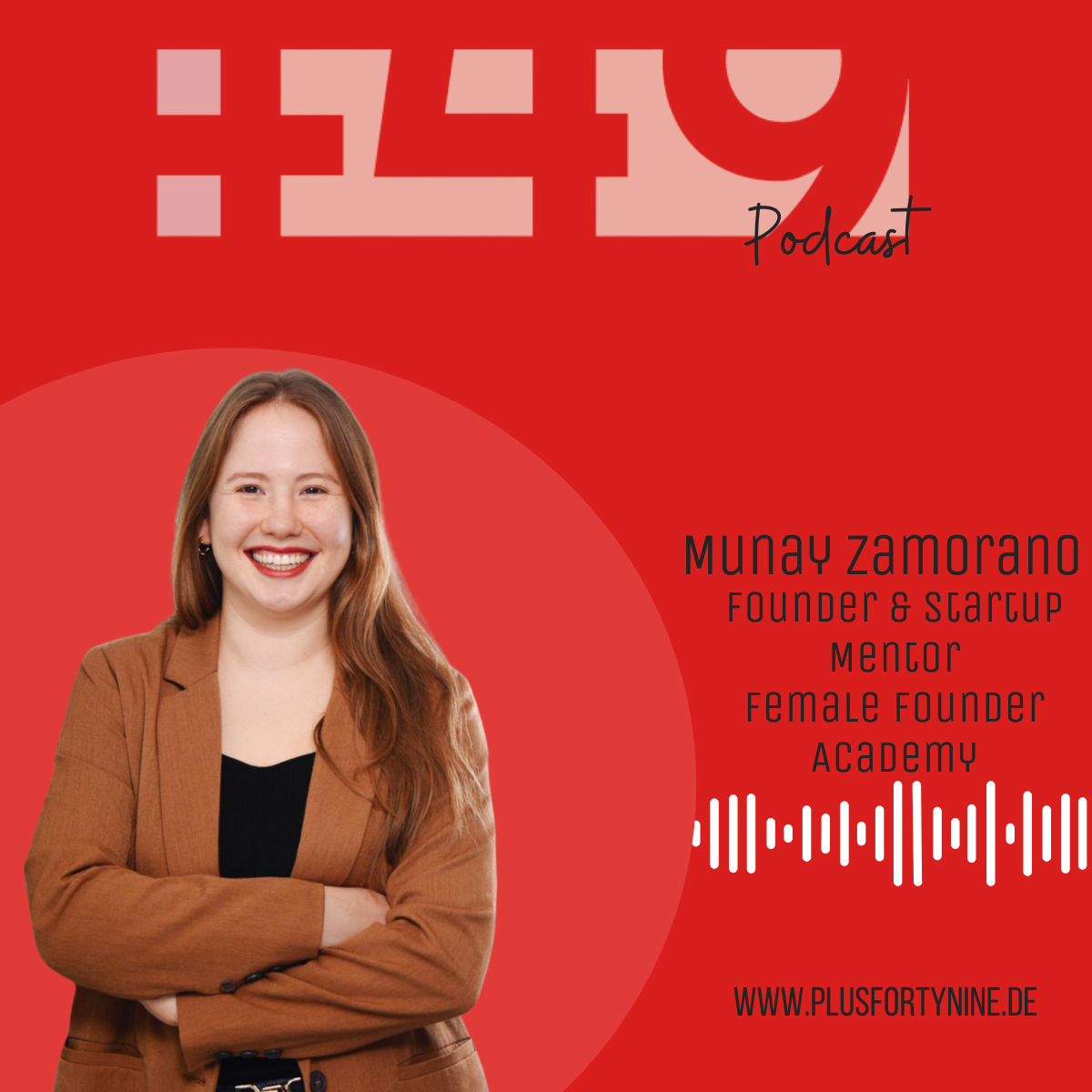
So, yes. Her name is Munay Zamorano. She’s an entrepreneur, mentor, speaker, and someone who seems to live in that space between networking and real connection.
Her father is from Chile. Her mother is German and US American. Munay was born in Germany, lived in Chile for a while, came back to Germany, spent a short time in the US, and then decided Germany was home.
Welcome, Munay.
Munay
So nice to be here. Thank you.
Andrea
It’s amazing to have you on board. Let’s get started.
For those who don’t know you, how would you describe your journey, both personally and geographically? And here’s something I’m curious about: do you see yourself as a migrant, or have you never seen yourself as one?
Munay
That’s such an interesting question to start with. No, I don’t see myself as a migrant because I was born in Germany. In many occasions I feel very German, even though there are just as many moments where I don’t feel German at all. You might notice it when I’m loud or when I love too much for German taste.
But I’ve always seen myself as German. And what I like, especially when I compare the three countries I call home, is that in Germany everything tends to work. That’s something I value a lot.
And I know this might be an unpopular opinion, but it makes me appreciate German bureaucracy too. Because for things to work, there have to be processes. These processes can suck. They can be hard and annoying. But they also ensure that things work in Germany, which is not always the case in Chile or the US.
Andrea
That is a strong start.
And you talk about bureaucracy with a kind of affection that most people don’t have, but I guess it makes sense when you’ve actually built something here. You mentor people, you work with founders. You know what it means to start.
Munay
I do, but there’s something important to clarify. I’m not a typical founder. I’m a business successor.
Business succession means I took over a business. I continued something I didn’t start. And the way it happened is actually a very interesting story.
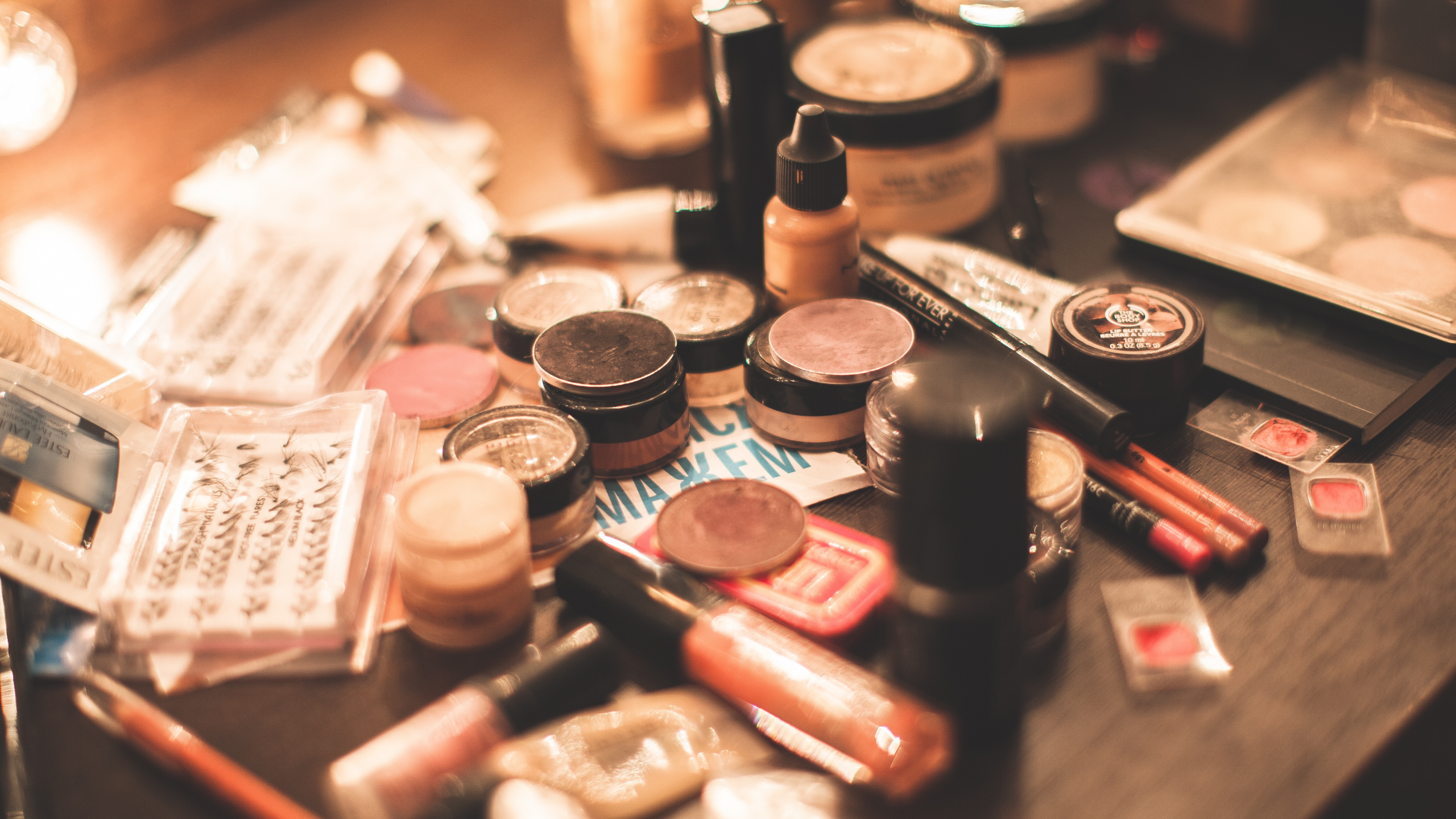
When I was twenty-three, I was studying business and working part-time as a working student in a startup. It was a small team, ten people, and the company was in the natural cosmetics space. It was a beautiful place to work.
Then the founder decided to start another company and wanted to focus completely on that new venture, so she decided to sell the existing business. She brought all of us together and explained her plan to find a buyer.
And in that moment I raised my hand and said, great, I’ll buy it.
Andrea
Okay, hold on. You were twenty-three. That’s bold. It’s extremely rare. How did that happen?
Munay
It wasn’t my family business. I had no family connection to it at all. And I wasn’t a millionaire either. I had to take a huge loan from the bank in order to do it.
It was a long process. It took a year to get there.
Andrea
I can imagine the bank hearing: twenty-three-year-old woman wants to buy a cosmetics company, and everyone’s confused.
Munay
Let me explain the business because it wasn’t a studio and it wasn’t a brand in that sense. It was a wholesale agency.
We imported sustainable beauty brands from all over the world to Germany and Europe. We signed exclusive distribution contracts, so we were the only ones allowed to sell certain brands either in the DACH region or across Europe. And then we sold to beauty shops.
Andrea
So your customers were the big ones, like Douglas, Rossmann, Flaconi, those kinds of places.
Munay
Exactly.
Andrea
And you ran this company for five years, and then you sold it.
Munay
Yes. I’m no longer the owner. I had it for five years. I had a great time, then I had a hard time, and then I sold it about a year ago.
Andrea
What made you decide to sell? Was it the same emotional pull that made you buy it?
Munay
A lot happened during those five years. It’s a wild ride. And we also need to remember: this was my first proper job. Being the owner of a business was my first full-time job. Which is insane when you think about it.
When I bought the company, I was in my saving the world era. I was very driven toward anything natural and sustainable. I felt aligned with the idea of fighting climate change, supporting better products, doing something meaningful.
But over time, I learned more about the natural cosmetics market. I learned about products, supply chains, packaging. I spent a ridiculous amount of time evaluating packaging.
And I realized something important. Anything that says sustainable is not always sustainable.
After selling thousands and thousands of products, I started questioning the industry and my own impact. Especially after meeting other founders in Berlin who were doing far more impactful work for the climate. Berlin’s founder scene is incredible, and being around that made me reflect on whether this path was really mine.
Emotionally, after about two or three years, I already knew: this isn’t my forever path.
But I would never have sold just because of that feeling. It had been such a hassle buying it in the first place. If I sold it after two years, it would have felt wrong. Like I wasn’t serious.
Then we had four amazing years of growth. And then in the fifth year, our biggest customer stopped buying from one day to the next.
Andrea
That’s crisis mode immediately.
Munay
Absolutely. That customer was around forty percent of our revenue.
And there’s another layer. We imported products from the US and Australia, and in the name of sustainability we shipped by cargo. That means products were on the ocean for months. We had prepaid them. So the money was gone, the products weren’t here yet.
And when they arrived, the clock was ticking. Natural cosmetics don’t use the same preservatives, so the best-before date was often twelve months. That sounds fine as a consumer, but in retail it’s different. Shops need time on the shelf, customers need time at home. So every day those products were becoming less valuable.
We were in absolute crisis mode.
And honestly, that’s the moment I felt relief.
Andrea
Relief?
Munay
Yes, because it gave me an external reason to sell. I could finally say: okay, now it makes sense to find a buyer.
I did. I had a strong network. I found someone, and I sold the company. It was aligned with my gut feeling, and it was liberating emotionally in every sense.
Andrea
Did you ever struggle with imposter syndrome during those five years? Especially as a woman, it comes up a lot.
Munay
Luckily I was born without imposter syndrome. I’ve never had it. I know it’s real and I know many people who struggle with it, but I didn’t.
That said, I didn’t always feel successful either. We were a small company. Five employees. It was always a struggle. I never woke up thinking everything runs smoothly.
There were always problems. And in a small business, every issue lands on your desk. From a big client leaving to the printer not working. Fix that too.
And let me tell you, I also don’t know how to fix a printer.
Andrea
Have you tried turning it off and on?
Munay
I tried seventeen times because I didn’t have the budget to buy a new one.
Andrea
Let’s go back to your multicultural background. Do you think it shaped how you make decisions, how you lead, how you solve problems?
Munay
Growing up in a very multicultural environment shaped me so much that I’d say almost all of my actions are influenced by it.
It makes me more understanding of other lived realities. It makes me aware of how many different ways people move through the world. That definitely shows up in how I work with others.
Andrea
And that brings us to your current work. The Female Founder Academy. Your baby.
Munay
It’s true. After I sold my business, it took me twelve days to start the next one.
Andrea
You make decisions fast.
Munay
I can’t stand still.
So I founded the Female Founder Academy. At first, it was almost just a vehicle so I could keep writing invoices because in Germany things have to be in order. But it evolved into something beautiful.
I started out mentoring only female founders. Most of my clients I see once a week. We talk through their issues, their problems, both in their business and with German bureaucracy because I’ve built a lot of experience there.
And then something interesting happened. Male founders started reaching out. Very respectfully. They’d say: I know your business is called Female Founder Academy, but I see your expertise. If it’s an option for you, could you work with me too?
So now I do. I love going with the flow and seeing where life takes me.
Andrea
And it says something that men are willing to step into that space and ask. That takes courage.
Munay
Exactly. That’s why I respected those messages even more.
Andrea
You also run workshops, right?
Munay
Yes, I love that part. I host workshops for startup programs across Germany. Universities, incubators, accelerators. I’m very lucky.
I teach networking for founders, because networking is a soft skill you can actually learn and it’s incredibly valuable.
And I teach personal branding for founders, where I show first-time founders how to use LinkedIn strategically, how to grow through social selling, how to position their product, and how to tell their founder story in a way that also becomes interesting for press.
Andrea
When you do these workshops, do you see many migrants in the room?
Munay
Always. I never know the exact mix, but I can always count on migrant founders being there.
So I come prepared in German and English, and I ask the group which language we should do. Most of the time they choose English because some participants haven’t been in Germany long.
And the statistics actually support this. Migrants in Germany have a higher rate of founding businesses than Germans.
Andrea
Do you know why?
Munay
I don’t. I could guess, but I’m sure there are studies on it. That might be another episode.
Andrea
What would you say have been your biggest challenges personally?
Munay
My challenges change depending on the life situation I’m in.
But entrepreneurship has thrown so many unpredictable challenges at me that I’ve developed a lot of calmness. Because I’ve seen so much happen, I know that every challenge will be overcome somehow.
By now almost nothing can faze me.
Andrea
Okay, you just blew my mind.
What would you tell your twenty-three-year-old self, the one who raised her hand and said I’ll buy it?
Munay
I’ve thought about it often.
I think I would stay quiet and say nothing, because I was in such a blissful state of being young and naive and having no idea what was coming.
If I told her everything I know now, she might not have done it.
So I’d keep her naive. And just say: go for it. You’ll learn on the way.
Andrea
What’s the biggest myth about entrepreneurship?
Munay
That you have to hustle all the time, work all night, never sleep.
Please, for the love of everything: go home, go to bed, get enough rest.
You will only be successful if you get enough sleep.
Andrea
That is also success. A healthy life is success.
Munay
Exactly.
Andrea
One last thing. Do you see a difference between foreign entrepreneurs and local entrepreneurs? Is there a unique strength among migrants?
Munay
That’s a great question.
What I actually see more is a difference between entrepreneurs and non-entrepreneurs.
Entrepreneurs, no matter their background, have a higher level of curiosity, drive, openness to learning.
And they have a willingness to fail. They test things. They accept unknown outcomes. That’s not very ingrained in German culture, but it shows up in entrepreneurs, even German entrepreneurs.
Andrea
I love that. Munay, thank you for being here. This was such a good conversation. And we’ll definitely have you back, maybe for a whole episode on bureaucracy and why German bureaucracy is, somehow, a bliss.
Munay
I’m ready.
Andrea
And that’s it for this episode of PlusFortyNine.
If you want a calm, clear overview of the news every morning, subscribe to our Morning Espresso. It’s free and lands straight in your inbox.
You can find us on Instagram at plus underscore forty nine. And if you have questions, stories, or your own experience of starting over in Germany, send us an email at info at plusfortynine.de.
I’m Andrea. Take it slow, enjoy the quiet, and we’ll meet again on the other side of the year.
Have a nice Christmas and a Happy New Year.